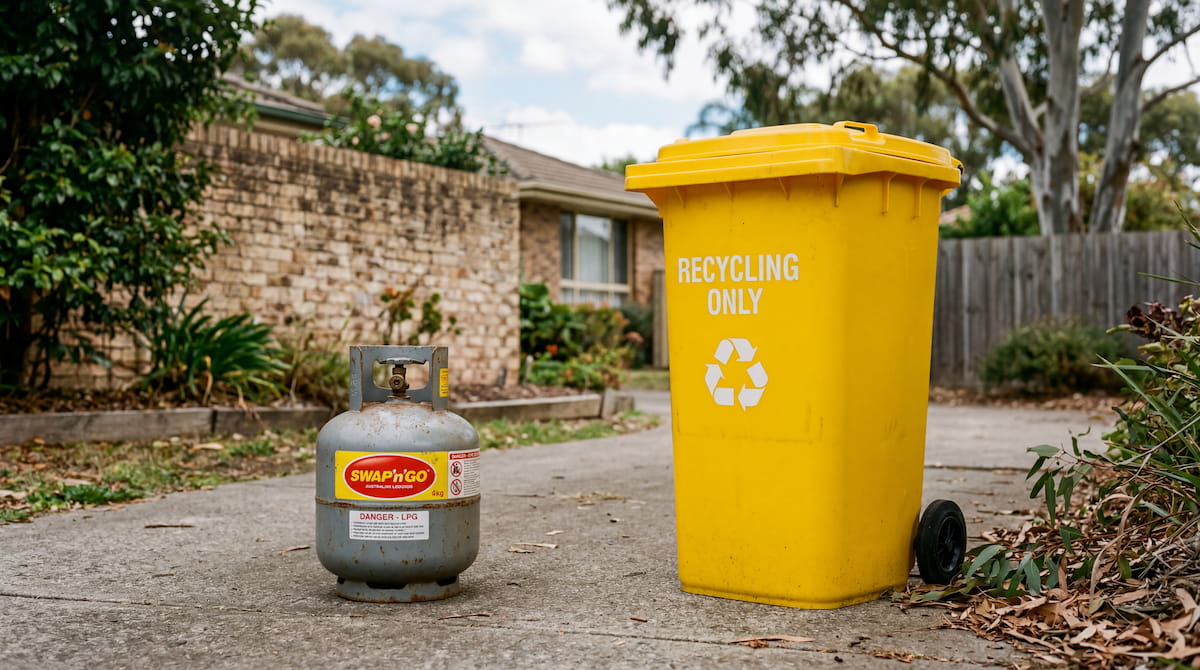
The short answer is no. Gas cylinders cannot go in your household recycling bin, your general waste bin, or at most Melbourne tips. This is not a council-by-council rule. It applies across Victoria and is backed by legislation. The reason is straightforward: pressurised cylinders are classified as dangerous goods, and the equipment used to collect, compact, and sort residential waste is not designed to handle them safely.
Why Gas Cylinders Are Banned from Recycling Bins in Victoria
Gas cylinders of all types are classified as dangerous goods under the Dangerous Goods Act 1985 in Victoria. This classification applies to:
- BBQ gas bottles (LPG, 4.5kg, 8.5kg, 15kg)
- CO2 cylinders and cartridges
- Nitrous oxide canisters (cream chargers, nangs)
- Camping gas canisters
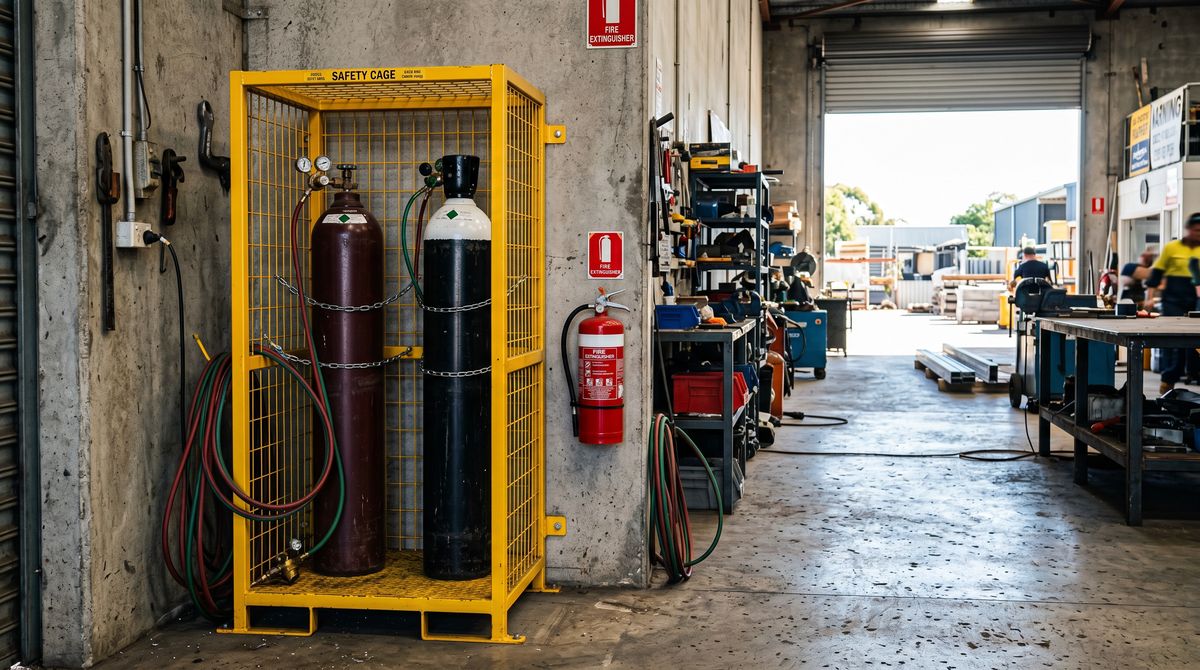
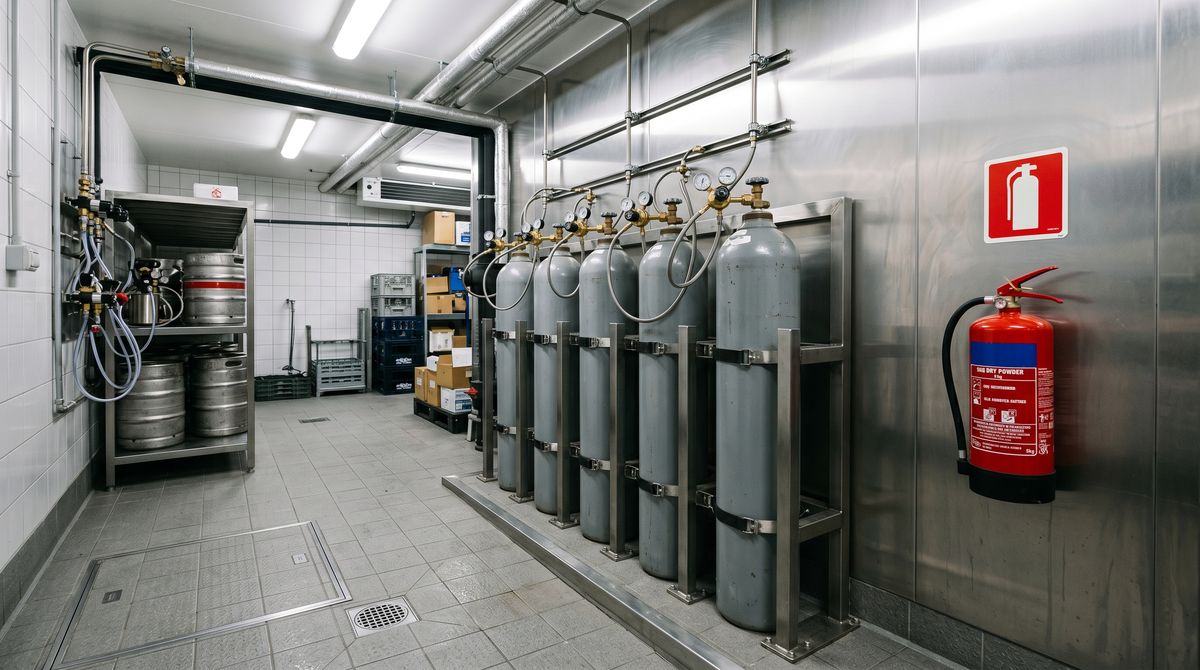
- Industrial gas cylinders (acetylene, oxygen, argon, helium)
- Small aerosol-style gas cartridges
The classification applies whether the cylinder is full, partially used, or apparently empty. Even a cylinder that has been fully discharged retains some residual pressure, which is enough to cause a dangerous rupture if the cylinder is punctured or crushed during waste handling.
What Happens If a Gas Cylinder Enters the Waste Stream?
Recycling trucks use compactors to crush collected materials. If a pressurised cylinder enters the compactor, it can rupture or explode. This creates an immediate injury risk to waste collection crews, can damage or destroy collection vehicles, and can start a fire if the released gas ignites.
For these reasons, municipal waste services across Victoria have strict policies excluding pressurised containers from all kerbside collection streams. Recycling facilities also flag and reject pressurised containers because they cannot be safely processed through standard sorting equipment.
Beyond the safety risk, placing dangerous goods in a kerbside bin may expose you to penalties under Victorian legislation for improper handling of dangerous goods.
What About the Tip?
Most Melbourne tips and transfer stations refuse to accept gas cylinders at the standard household drop-off gate. Some larger facilities have a designated area for household hazardous materials where small quantities of gas cylinders are accepted, but this varies by council and by facility. Contact your local transfer station before making the trip, as policies differ significantly.
If the tip refuses them, a licensed collection service or an upcoming council hazardous waste drop-off event are your remaining options.
Legal Disposal Options for Gas Cylinders in Melbourne
1. Licensed Collection Service
A licensed dangerous goods collection service comes to your property and handles everything safely. This is the most practical option for most households and businesses, particularly for larger cylinders or multiple items.
Transnitro provides gas cylinder collection across Melbourne for all common cylinder types:
- BBQ gas bottle recycling Melbourne
- LPG cylinder disposal Melbourne
- CO2 canister recycling Melbourne
- Nitrous oxide (nang) canister disposal Melbourne
- Industrial gas cylinder disposal Melbourne
2. Gas Bottle Swap Programs (BBQ LPG Only)
Standard BBQ gas bottles in the 4.5kg, 8.5kg, and 15kg LPG sizes can be swapped for a full replacement at Bunnings, Coles, Woolworths, and participating petrol stations through programs such as Swap’n’Go or Cylinder King.
This only works for cylinders that are undamaged and within their test date. The test date is stamped on the collar of the cylinder. Standard LPG cylinders must be retested every 10 years. If the date has passed, swap programs will refuse the cylinder and it must go through a licensed disposal service instead.
3. Council Hazardous Waste Drop-Off Days
Many Melbourne councils run periodic hazardous waste events that accept gas cylinders from households. These are free but run only a few times per year and accept household quantities only. Check your council’s website for upcoming dates.
What Happens to the Cylinder After Proper Disposal?
Gas cylinder recycling involves safely depressurising the cylinder to remove any residual gas, removing and inspecting the valve, and then sending the steel cylinder for metal recycling. Steel is 100% recyclable and can be melted down and reused indefinitely without any loss of quality.
This is why proper disposal matters beyond just meeting the legal requirement. A steel gas cylinder sent to landfill wastes a valuable, fully recoverable material. Through a licensed collection service, the metal is recovered and returned to the manufacturing supply chain.
Frequently Asked Questions
Is it illegal to put a gas cylinder in the recycling bin in Victoria?
Yes. Gas cylinders are classified as dangerous goods under the Dangerous Goods Act 1985. Placing them in residential recycling or general waste bins is not permitted under Victorian law.
What if my gas cylinder is completely flat?
Even a completely flat cylinder retains trace residual pressure and is still classified as dangerous goods. A licensed disposal service, a swap program for eligible LPG cylinders, or an approved drop-off event remains necessary.
Can I take a gas cylinder to the tip myself?
Some Melbourne tips accept small household quantities at a designated hazardous materials area, but most standard drop-off gates refuse them. Contact your local transfer station before visiting to confirm whether they accept gas cylinders and what conditions apply.
Can I recycle just the metal from a gas cylinder myself?
No. Gas cylinders must be depressurised and rendered permanently unusable before the steel can be sent for scrap. A licensed collection service handles this process and ensures the steel is properly recovered for recycling.
What is the test date on a BBQ gas bottle?
The test date is stamped on the collar of the cylinder and shows the last date the cylinder was hydrostatically tested. Standard LPG cylinders require retesting every 10 years. An expired cylinder will not be accepted at swap programs and must be disposed of through a licensed service.
Need Gas Cylinder Collection in Melbourne?
Transnitro collects all types of gas cylinders from Melbourne households and businesses. Compliant, insured, and straightforward.