Gas cylinder disposal is one of the most common dangerous-goods problems a business will run into, and one of the easiest to get wrong. A cylinder can look empty, feel light, and still hold enough pressure or residual gas to be treated as dangerous goods. That is why a cylinder cannot be thrown in a bin, dropped in a skip, or left for a general waste contractor to take away.
This guide explains the practical side of gas cylinder disposal in Australia: why normal waste channels do not work, the common cylinder types you are likely to find on site, what to check before you arrange a collection, and the situations where it is worth getting advice before anyone moves a cylinder.
Why Gas Cylinders Cannot Go in Normal Waste
A gas cylinder is a pressure vessel. Even a cylinder that reads empty on a gauge usually holds some residual pressure, and that is enough to make it a hazard during waste handling. General waste and kerbside recycling are built around compaction. When a pressurised cylinder is crushed in a truck or at a transfer station, it can rupture violently, and if the gas inside is flammable it can ignite. Pressurised cylinders are treated as dangerous goods, with clear duties around how this kind of waste is handled, transported and disposed of.
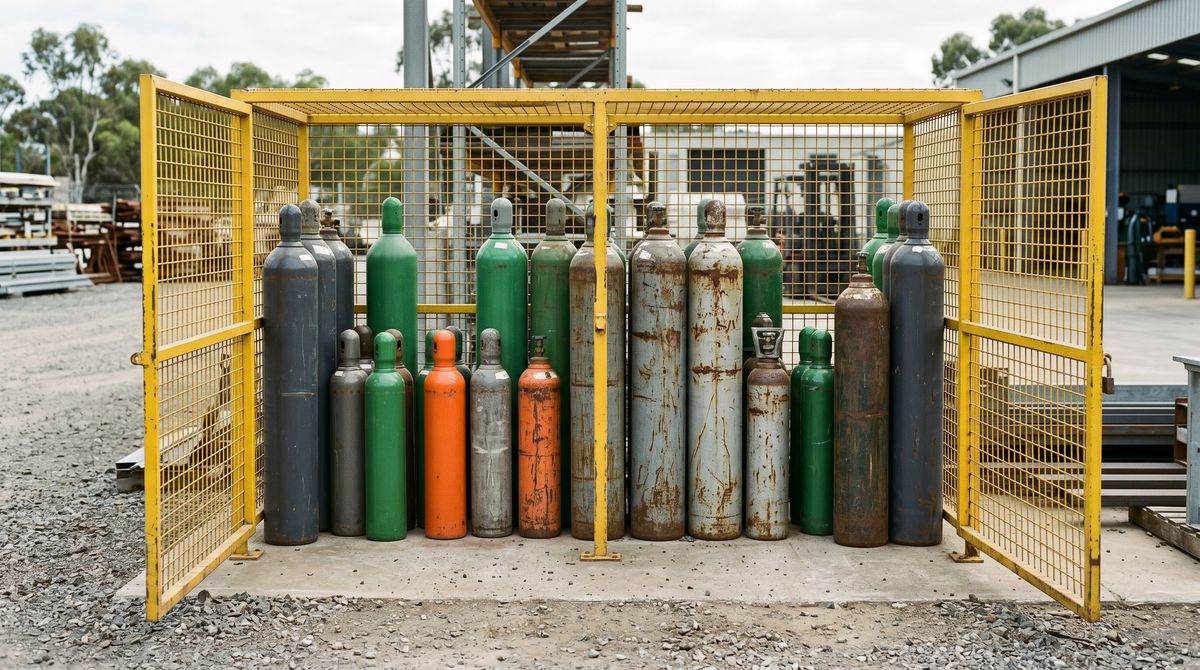
There is also the problem of the unknown. Many cylinders that pile up on a site have lost their labels, have a damaged valve, or were inherited from a previous tenant or operator. If you cannot confirm what is inside a cylinder or whether it is fully empty, it has to be treated as a potential hazard, not as scrap metal.
For a business the risk is broader than the cylinder itself. There is the question of who is responsible for it, whether it is safe to move, and whether the people handling it are equipped to do so. Putting a cylinder in the general waste stream does not remove that responsibility, it usually just moves the risk somewhere less controlled.
Common Gas Cylinder Types You Will Come Across
Gas cylinders are not all the same, and the type matters because it changes how the cylinder should be handled. The most common types found on commercial and public sites are:
- LPG bottles: used for BBQs, patio heaters, forklifts, and portable cooking. Flammable, and frequently out of test date or refused by swap programs
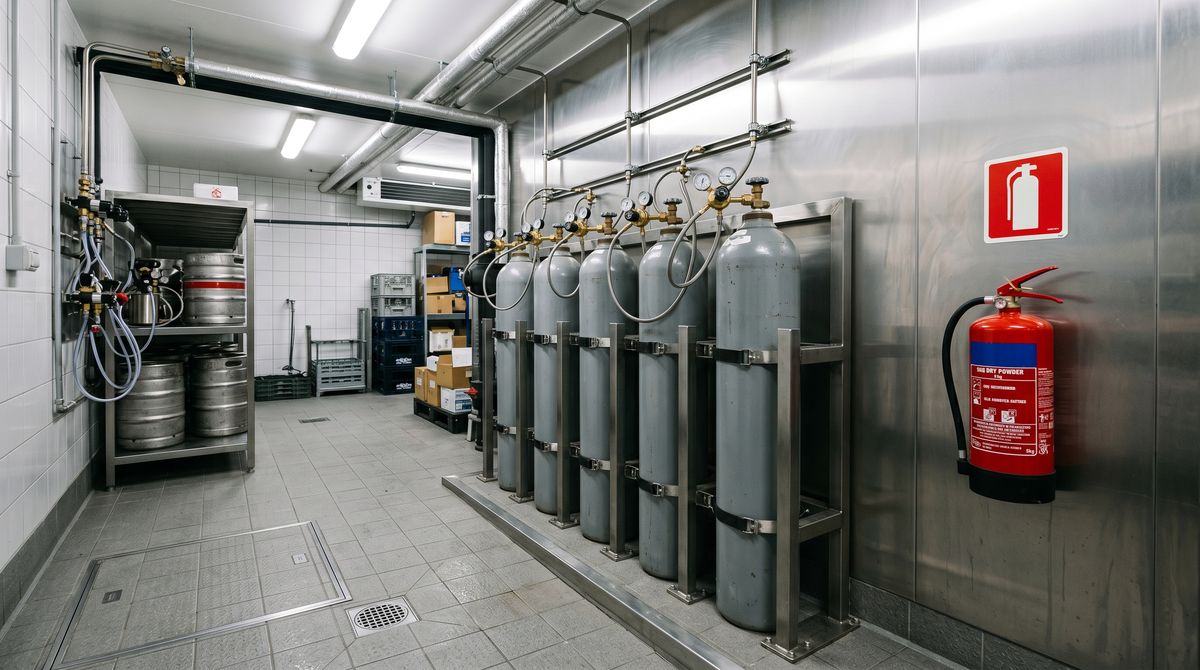
- CO2 cylinders: used in hospitality beverage systems, draught lines, and some refrigeration. Common in restaurants, bars, and venues
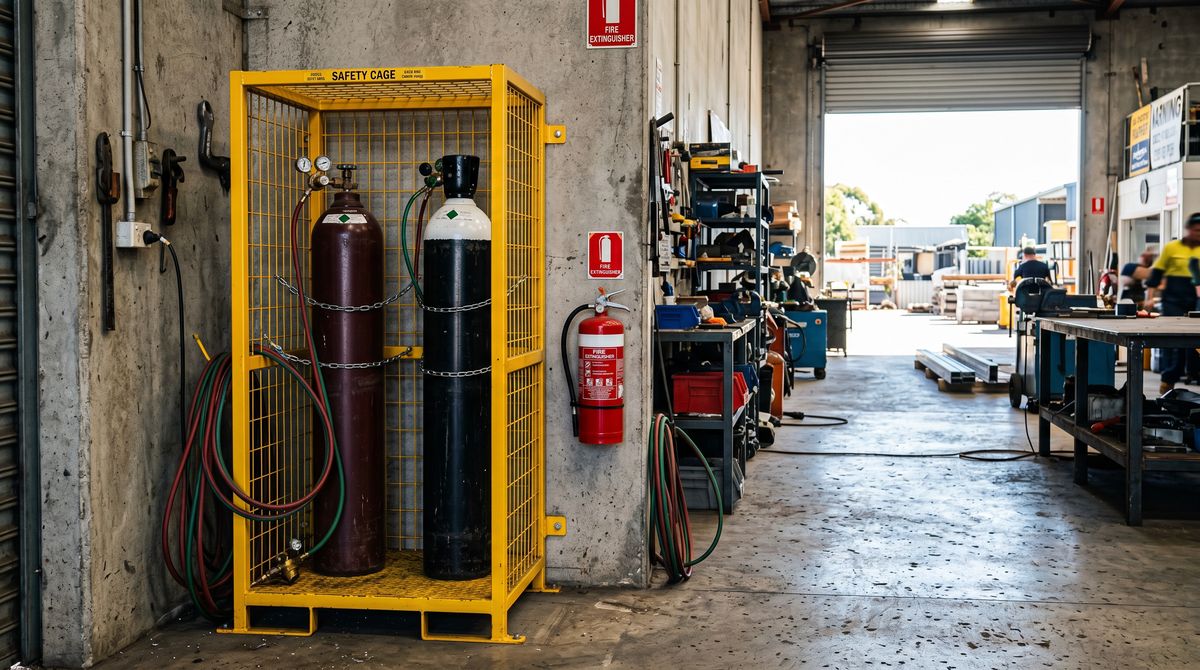
- Oxygen and medical cylinders: used in workshops, healthcare, and welding. Oxygen supports combustion, so it needs careful handling
- Acetylene cylinders: used for oxy-acetylene cutting and welding. Among the most sensitive cylinders to handle and never something to scrap on site
- Helium cylinders: used for balloons and events, and often left behind after functions
- Nitrous oxide canisters: from commercial kitchens or discarded in public and shared spaces
- Camping and small gas canisters: butane and propane canisters that build up at venues, campgrounds, and rental properties
Unknown, Damaged, or Leaking Cylinders
If a cylinder is unlabelled, badly rusted, dented, partly full, or shows any sign of leaking, set it aside in a safe, ventilated spot away from ignition sources and people, and get advice before it is moved through any waste pathway. A leaking or damaged cylinder is the one situation where doing nothing further yourself is the safest option.
Supplier-Owned or Rented Cylinders
Some cylinders, particularly industrial gas and CO2, remain the property of the original supplier even when they look abandoned. If a cylinder carries a supplier name or rental markings, it is worth checking whether it can be returned under that arrangement first. Where the supplier relationship has ended or cannot be traced, the cylinder still needs a safe disposal route.
What Not to Do With Old Gas Cylinders
A few actions cause most of the serious incidents, and all of them are avoidable:
- Do not place cylinders in household bins, public bins, recycling bins, or skips
- Do not put cylinders into a general waste compactor or hand them to a contractor not equipped for dangerous goods
- Do not puncture, crush, vent, cut, or dismantle a cylinder to “empty” it
- Do not store unknown or damaged cylinders indefinitely in a storeroom, yard, or bin room
Venting or puncturing a cylinder to release pressure is particularly dangerous. It can release flammable or asphyxiating gas, build static, and turn a stable container into an immediate hazard. There is no safe home or workshop method for depressurising a cylinder.
What to Check Before You Arrange Collection
A few minutes of information gathering makes a collection faster and safer to arrange. Where it is safe to do so, note down:
- Clear photos of each cylinder and any labels or markings
- The number of cylinders and their approximate size
- The gas type if it is shown, or a note that it is unknown
- The condition: full, empty, rusted, damaged, or leaking
- The site location, access details, and any loading or timing constraints
If the cylinders are at a business, venue, strata building, or workshop, also note whether there are access restrictions, lift or loading-dock requirements, or times when collection cannot happen. This is the information a collection service needs to recommend the right approach.
Common Situations Where Cylinders Build Up
Gas cylinders rarely arrive as a single tidy problem. They accumulate. Facility and operations teams most often deal with them during a site cleanout, a tenancy change, an equipment upgrade, or after an event. Property managers find them left in garages, sheds, and bin rooms by previous tenants. Councils and venues find them dumped in public spaces or back-of-house areas with no owner attached.
In each of these cases the practical question is the same: there are one or more cylinders, the contents or ownership may be uncertain, and standard waste services will not take them. That is the point at which a dedicated collection pathway makes sense rather than leaving the cylinders to sit.
How Transnitro Can Help
Transnitro is an advice-led collection option for difficult gas-cylinder and dangerous-goods waste where normal bin, swap, or drop-off pathways are not suitable. The starting point is usually simple: identify what you have, how many, and the site conditions, so the safest practical collection approach can be worked out before anything is moved.
If you are not sure what you are looking at, that is the most common starting point, not a problem. Send photos and a few basic details and the team can advise on the next step. Where you have other pressurised or dangerous-goods items on site at the same time, such as industrial gas cylinders, LPG bottles, or BBQ gas bottles, they can usually be handled together to reduce disruption.
Frequently Asked Questions
Can gas cylinders go in the recycling bin?
No. Gas cylinders should never be placed in recycling bins, general waste bins, public bins, or skips. They are pressure vessels, and crushing or compacting them during waste handling can cause a rupture or, with flammable gases, ignition.
What if the cylinder feels empty?
Treat it as if it still holds pressure. A cylinder that reads or feels empty almost always retains some residual gas, and with an unlabelled cylinder you cannot be certain what that gas is. Empty-looking is not the same as safe to bin.
Can a business store old cylinders until later?
Short-term separation in a safe, ventilated area is reasonable while you arrange collection, but old cylinders should not be left indefinitely in storerooms, yards, or bin areas. Stockpiles grow, labels fade, and a manageable job becomes a larger one. Identify the cylinders and arrange advice rather than letting them sit.
Do I need to know what gas is inside before I call?
No. Unknown cylinders are one of the most common reasons people get in touch. Send what you can see, including photos of any markings, and note that the contents are unidentified. That information is enough to advise on a safe approach.
What details should I send to get advice or a quote?
Send photos where it is safe to take them, the approximate number and size of cylinders, the gas type or a note that it is unknown, the suburb and access notes, and whether the enquiry is for a business, council, venue, workshop, or property. That is enough to recommend the next practical step.
Need Advice on Gas Cylinder Disposal?
If you have old or unknown gas cylinders building up on site, the safest first step is to identify what you have before anyone moves them. Send photos and a few basic details and Transnitro can advise on a safe collection pathway.