Paint disposal is one of the most common jobs people get wrong, and one of the easiest to mishandle. Half-used tins accumulate in garages, maintenance stores, and site sheds, and when it is finally time to clear them out the temptation is to tip the liquid away or drop the tins in the bin. Neither is the right answer, and for businesses and property managers the stakes are higher because the quantities are larger and the responsibility is clearer.
This guide is a practical overview of paint disposal for property managers, businesses, builders, maintenance teams, councils, and households. It covers what actually determines how paint should be handled, the mistakes to avoid, and what to check before arranging disposal.
What Determines How Paint Should Be Disposed Of
There is no single rule for “paint”, because paint disposal depends on several factors. The type of paint matters, the quantity matters, the condition of the container matters, and whether it is a household amount or a commercial volume matters. A single dried-out tin in a home garage is a very different situation from a maintenance store holding dozens of part-used tins of mixed types.
Getting those factors clear is the first step, because they determine which disposal route is appropriate. Treating all paint the same is exactly how the wrong things end up down a drain or in a skip. For small household quantities, national stewardship programs such as Paintback accept leftover paint and packaging at registered drop-off points.
Water-Based and Solvent-Based Paint
The most important distinction is between water-based and solvent-based paint, because they behave very differently as waste.
Water-Based Paint
Water-based paints, such as most acrylics, are the more forgiving of the two, but liquid water-based paint still should not go down drains or into general waste while it is wet. The container condition and quantity still dictate the right approach, particularly for businesses dealing with more than a tin or two.
Solvent-Based Paint
Solvent-based and oil-based paints, along with the thinners and cleaning solvents that go with them, are flammable and are treated as hazardous waste. These should never be poured away, mixed with other liquids, or placed in general rubbish. Commercial quantities of solvent-based paint in particular need a proper disposal pathway.
What Not to Do With Leftover Paint
The mistakes that cause environmental harm and create hazards are well known and worth stating plainly:
- Do not pour liquid paint down drains, sinks, toilets, stormwater, or onto soil
- Do not place leaking or part-full liquid tins into general waste or a skip
- Do not mix unknown paints, solvents, or liquids together
- Do not assume solvent-based paint can be treated the same as water-based
Pouring paint down any drain is the most damaging of these. Drains and stormwater often lead to waterways, and even water-based paint is a pollutant in that context. Mixing unknown liquids is the other one to avoid, because some combinations react or create a more hazardous mixture than the separate parts.
Partly Full, Leaking, and Commercial Quantities
Most real-world paint disposal is not a single neat tin, and the awkward cases are worth planning for.
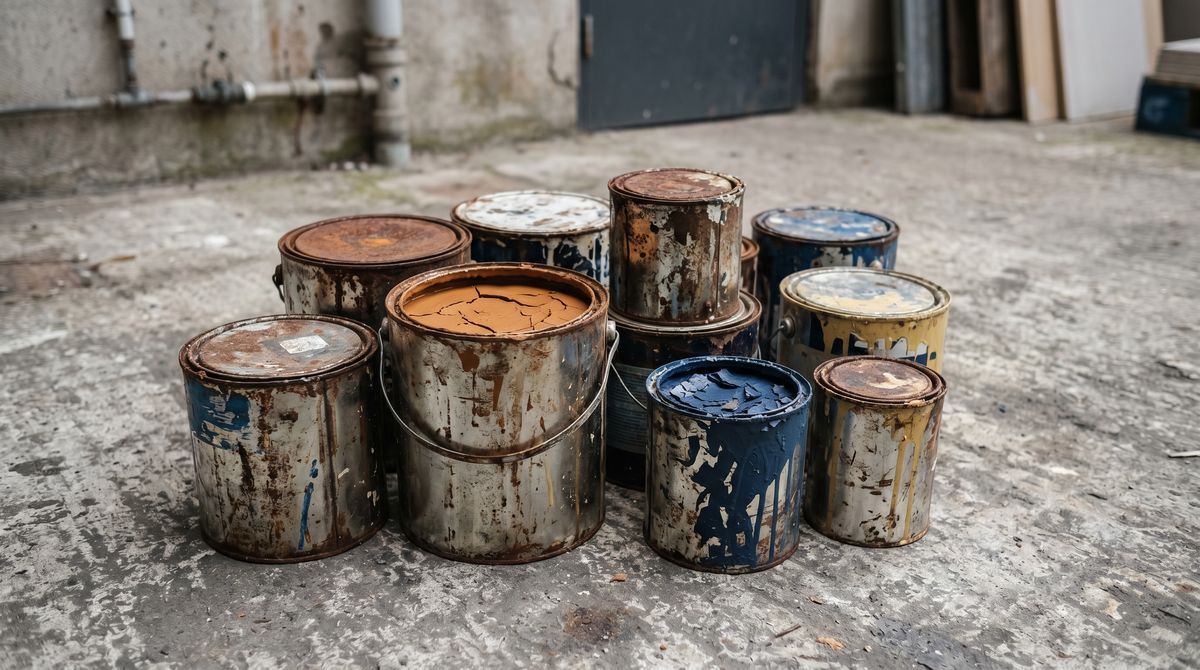
- Part-full tins: the most common situation, where liquid paint remains and the tin cannot simply go in the bin
- Leaking or damaged tins: need to be kept contained and away from drains, and should not go into general waste
- Commercial quantities: a maintenance store, builder, or facility clearing many tins at once needs a collection rather than a drop-off
- Mixed and unlabelled tins: where the type is unclear, the paint should be treated as the more cautious category until confirmed
For property managers and maintenance teams, it is usually the volume and the mix that make standard household options impractical, which is where a collection makes sense.
What to Check Before Arranging Disposal
A bit of preparation makes paint disposal straightforward. Before arranging help, check and note:
- The approximate quantity, in number of tins or litres
- The condition of the containers: sealed, part-full, dried out, or leaking
- The type if known: water-based, solvent-based, or specialty
- Whether it is a household amount or a commercial quantity
- The site type and access details
If you genuinely cannot tell what a tin contains, note that too. It is better to flag an unknown than to guess and put it in the wrong stream.
How Transnitro Can Help
Transnitro can advise on a suitable disposal pathway for paint where household drop-off options are not practical, particularly for commercial quantities, leaking or damaged tins, and mixed loads. The useful starting point is the quantity, the type if known, and the container condition, so the right approach can be recommended.
If a site is being cleared and there are other hazardous items alongside the paint, such as aerosols, solvents, or old cylinders, they can usually be assessed together. You can read more in our guide to paint disposal and our overview of hazardous waste disposal for businesses.
Frequently Asked Questions
Can I pour leftover paint down the drain?
No. Liquid paint, including water-based paint, should never go down drains, sinks, toilets, or stormwater, because these often lead to waterways. Solvent-based paint is also flammable and hazardous and must be kept out of drains entirely.
Can I put paint tins in the bin?
A fully dried-out water-based tin is sometimes accepted in general waste depending on local rules, but liquid, part-full, leaking, or solvent-based tins should not go in the bin. When in doubt, treat the paint as something that needs a proper disposal pathway.
What is the difference between water-based and solvent-based paint for disposal?
Water-based paint is less hazardous but still should not be poured away while wet. Solvent-based and oil-based paints are flammable and treated as hazardous waste, so they need a proper disposal route and must never be mixed or tipped out.
We have a large number of tins to clear from a site. What is the best approach?
Commercial quantities and mixed loads are better handled by a collection than by repeated drop-offs. Note the number of tins, the types, and the container condition, and arrange a collection for the lot.
What details should I send to arrange disposal?
The quantity, the container condition, the paint type if known, whether it is household or commercial, and the site and access details. Flag anything leaking or unidentified.
Need Help With Paint Disposal?
Whether it is a maintenance store full of part-used tins or a single load from a site cleanout, send a few details about the quantity, type, and condition and Transnitro can advise on a suitable disposal pathway.