Automotive workshops are among the highest-risk premises for dangerous goods in Melbourne, and among the most closely monitored by both WorkSafe Victoria and EPA Victoria. Between gas cylinders for welding and cutting, CO2 for MIG welding and diagnostic systems, fire extinguishers, paint and solvent waste, and aerosol products, even a small mechanical or panel beating workshop generates multiple streams of regulated waste.
Getting disposal right is not optional. This guide covers what your workshop generates, how it is classified, and what a compliant disposal arrangement looks like under Victorian legislation.
What Dangerous Goods Does an Automotive Workshop Generate?
Welding and Cutting Gas Cylinders
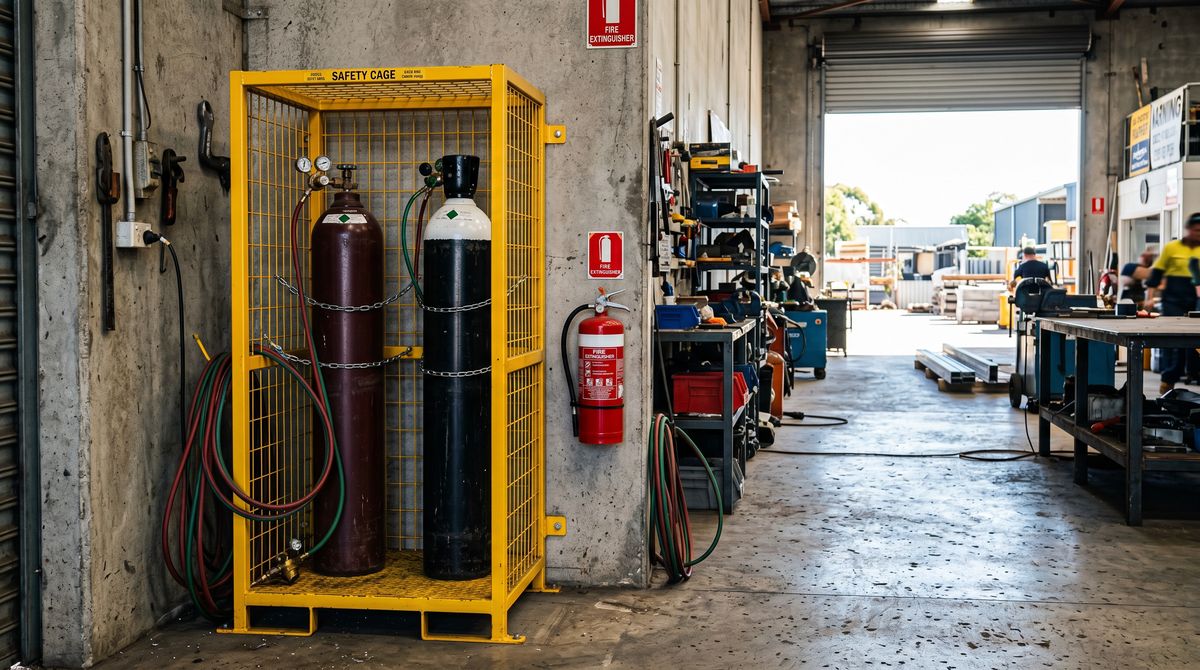
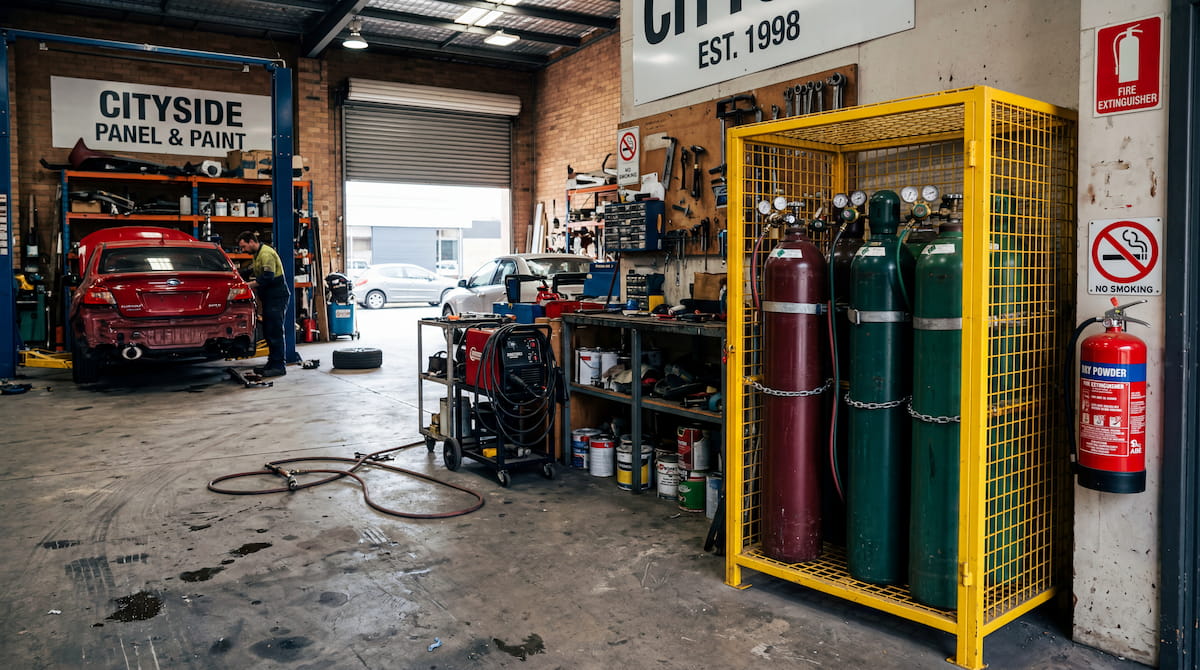
Workshops that do panel repair, fabrication, or exhaust work typically have acetylene, oxygen, argon, and CO2 cylinders on site. These are all Class 2 dangerous goods under the Dangerous Goods Act 1985. When cylinders reach end of life or are condemned during testing, they must be disposed of by a licensed operator and cannot be placed in a skip or left at the tip.
Transnitro provides industrial gas cylinder disposal across Melbourne for welding and cutting cylinder types, including acetylene, oxygen, and argon.
CO2 Cylinders
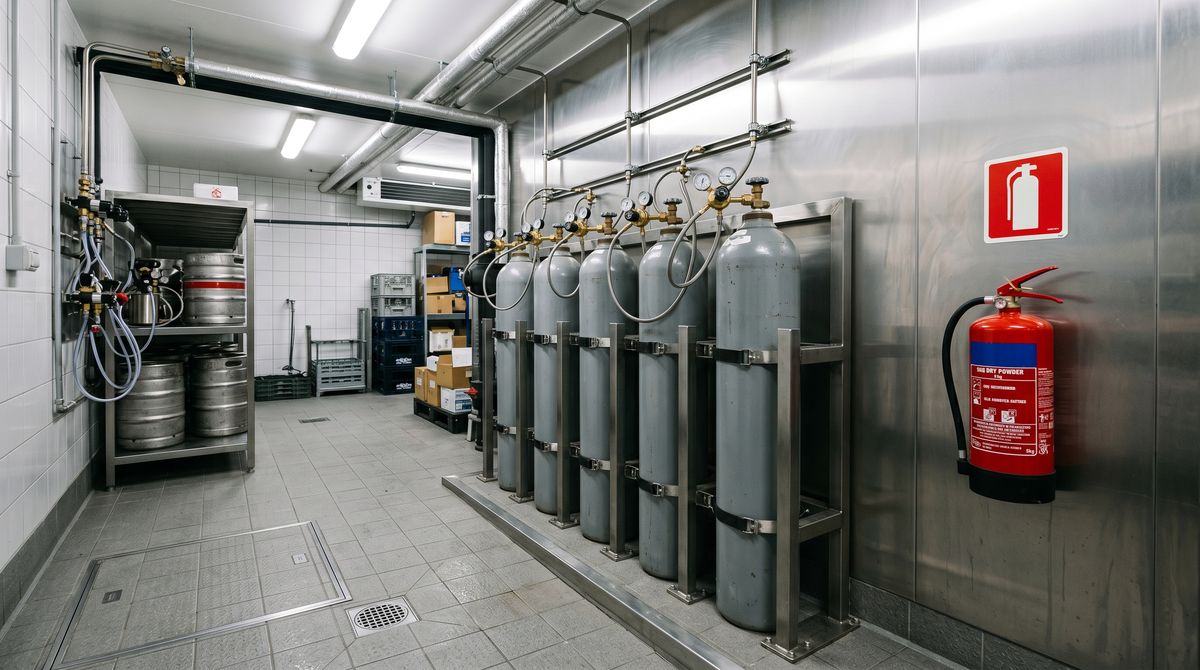
CO2 is used in MIG welding operations, paint rooms, and some workshop diagnostic tools. Like all compressed gas cylinders, used or condemned CO2 cylinders are dangerous goods and cannot be placed in skip bins or general waste under Victorian law.
Fire Extinguishers
Workshops are required to maintain fire extinguishers under Australian fire safety standards, particularly given the flammable liquids and gases commonly present. When extinguishers are replaced or reach end of life following an annual service, they must be disposed of by a licensed dangerous goods collection service. They cannot go in a skip or general waste.
Transnitro provides fire extinguisher disposal for Melbourne automotive businesses, including workshops, panel beaters, and tyre centres.
Paint and Solvent Waste
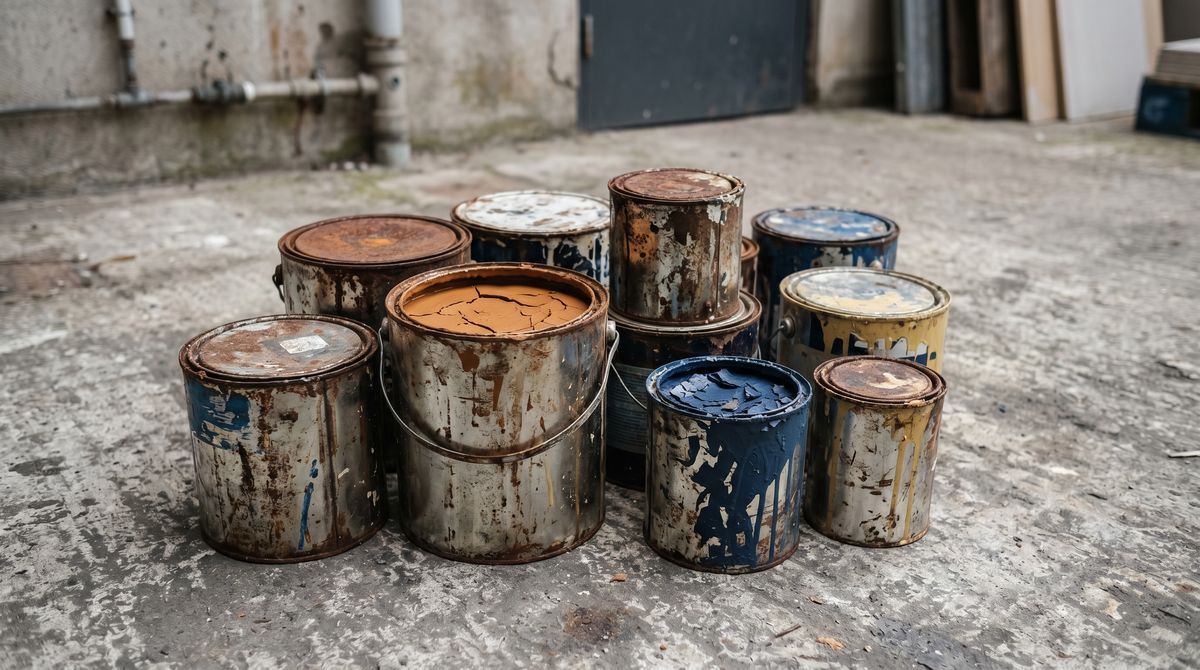
Paint shops and panel beaters generate significant volumes of solvent-based waste. Waste solvents, thinners, and paint residues are prescribed waste under Schedule 2 of the Environment Protection Regulations 2021 and must be collected by a licensed waste contractor. Placing paint waste in a skip bin or disposing of it via a drain creates direct liability under EPA Victoria’s duty of care provisions and can trigger both EPA and WorkSafe enforcement action.
Transnitro provides paint waste disposal for Melbourne automotive businesses.
Aerosols and Small Pressurised Containers
Workshops use aerosol lubricants, cleaning sprays, and solvent products regularly. Used aerosol cans are dangerous goods in Victoria and cannot be placed in general waste bins. They should be collected alongside other pressurised containers by a licensed operator.
Victorian Regulations That Apply to Automotive Workshops
Automotive workshops in Victoria operate under oversight from two primary regulators for dangerous goods:
WorkSafe Victoria administers the Dangerous Goods Act 1985 as it relates to storage and workplace handling. This covers the quantities you can store, how cylinders must be secured and labelled, segregation of incompatible gases, ventilation requirements for paint bays, and emergency procedures. WorkSafe conducts inspections of workshops, particularly those with welding and cutting operations or spray painting equipment.
EPA Victoria administers the Environment Protection Act 2017 for waste-related obligations. This governs how waste leaves your premises, who can collect it, and what documentation you must retain. EPA conducts compliance audits and can issue infringement notices and prosecute businesses for improper disposal.
Failure to comply with WorkSafe’s storage requirements can result in improvement notices, prohibition notices, and fines. Failure to comply with EPA’s disposal requirements can result in infringement notices and prosecution proceedings.
Your Obligations for Safe Disposal
As a dangerous goods waste generator, your workshop’s core obligations are:
- Segregate dangerous goods waste from general waste on premises. Never place cylinders, aerosols, or paint waste in a general skip.
- Use a licensed dangerous goods contractor for collection. Verify the licence before engagement, not after an incident.
- Retain all collection documentation. Consignment notes and disposal confirmations should be kept for a minimum of seven years.
- Manage storage quantities. Do not allow condemned cylinders or waste solvents to accumulate beyond safe storage limits without arranging regular collection.
Common Compliance Mistakes in Automotive Workshops
Cylinder Storage Beyond Safe Limits
Workshops that do not arrange regular cylinder disposal sometimes accumulate condemned or expired cylinders in a corner of the workshop. Once quantities exceed WorkSafe’s manifest thresholds, a storage licence is required, and uninspected storage creates both regulatory and insurance liability.
Paint Waste in Skips
One of the most common compliance failures in the automotive sector. Solvent-based paint waste and thinners placed in a general skip is not compliant, and it creates a genuine fire risk. A single incident can trigger concurrent WorkSafe and EPA investigations.
Assuming the Gas Supplier Handles Old Cylinders
Some workshops assume that when they exchange gas cylinders through their regular supplier, the old cylinders are being correctly disposed of. Unless the supplier is licensed to transport dangerous goods waste and provides consignment documentation, this assumption may not be accurate and does not discharge your duty of care.
Frequently Asked Questions
Can I put used aerosol cans in the general waste bin at my workshop?
No. Aerosol cans are dangerous goods in Victoria and cannot be placed in general waste or recycling bins. They must be collected alongside other pressurised containers by a licensed operator.
Does WorkSafe inspect automotive workshops for dangerous goods compliance?
Yes. WorkSafe Victoria conducts inspections of workshops, particularly those with welding and cutting operations or spray painting equipment. Dangerous goods storage, cylinder securing, and paint bay ventilation are areas routinely assessed.
How do I know if my gas supplier is correctly handling old cylinders?
Ask for documentation. A licensed carrier will provide consignment notes and evidence of disposal. If they cannot provide this, they may not be licensed to transport dangerous goods waste, and you retain duty of care liability for those cylinders.
How often should we arrange a gas cylinder collection?
This depends on how frequently you condemn or retire cylinders. As a general guide, do not allow condemned cylinders to accumulate for more than a quarter without arranging collection. Transnitro can advise on an appropriate frequency based on your workshop’s volume.
Can Transnitro collect multiple waste types from our workshop in one visit?
Yes. We can collect gas cylinders, fire extinguishers, and paint waste in a single collection, minimising disruption to your workshop operations and reducing the number of separate contractors you need to manage.
Set Up Compliant Dangerous Goods Disposal for Your Melbourne Workshop
Transnitro provides licensed dangerous goods collection for Melbourne automotive businesses with documentation confirming EPA-compliant disposal.